Puerto Rico 2024
CiCAT: Co-innovation for Caribbean Agroecological Transitions
EN
The Caribbean region is an epicentre for extreme weather events, with frequent droughts and periodic hurricanes. These climatic events, along with the structural legacies of colonialism and slavery, affect Caribbean food systems. This has led to vulnerabilities that are further exacerbated by environmental degradation and underinvestment in social institutions and communities.
This research project looks to deepen knowledge of the strength of agroecological farms and peasant movements in resisting and recovering from hurricanes, as well as growing social movements that build community capacity through knowledge sharing, networking and mutual aid. Through a critical analysis of the science and the use of decolonial methodologies we seek to bring farmers’ voices to the forefront and contribute to the collective imagination of an achipelago dreaming of new futures.
CiCAT is the doctoral research project of Lucas Sebastián Worsdell of the Centre for Agroecology, Water, and Resilience (CAWR) at Coventry University in England, supervised by Dr. Georges Felix (UPRM), in collaboration with the Proyecto Agroecológico Campesino (PAC) of Lares, Boriken.
The Caribbean region is an epicentre for extreme weather events, with frequent droughts and periodic hurricanes. These climatic events, along with the structural legacies of colonialism and slavery, affect Caribbean food systems. This has led to vulnerabilities that are further exacerbated by environmental degradation and underinvestment in social institutions and communities.
This research project looks to deepen knowledge of the strength of agroecological farms and peasant movements in resisting and recovering from hurricanes, as well as growing social movements that build community capacity through knowledge sharing, networking and mutual aid. Through a critical analysis of the science and the use of decolonial methodologies we seek to bring farmers’ voices to the forefront and contribute to the collective imagination of an achipelago dreaming of new futures.
CiCAT is the doctoral research project of Lucas Sebastián Worsdell of the Centre for Agroecology, Water, and Resilience (CAWR) at Coventry University in England, supervised by Dr. Georges Felix (UPRM), in collaboration with the Proyecto Agroecológico Campesino (PAC) of Lares, Boriken.
ES
La región del Caribe es un epicentro para eventos climáticos extremos, con sequías frecuentes y huracanes periódicos. Estos eventos climáticos, junto con los legados estructurales del colonialismo y la esclavitud, afectan a los sistemas alimentarios del Caribe. Esto ha llevado a vulnerabilidades que se agravan aún más por la degradación ambiental y la subinversión en instituciones y comunidades sociales.
Este proyecto de investigación busca profundizar el conocimiento de la fuerza de las fincas agroecológicas y los movimientos campesinos para resistir y recuperarse de los huracanes, así como los crecientes movimientos sociales que construyen la capacidad comunitaria a través del intercambio de conocimientos, la creación de redes y la ayuda mutua. A través de un análisis crítico de la ciencia y el uso de metodologías decoloniales, buscamos poner las voces de los agricultores en primer plano y contribuir a la imaginación colectiva de un archipiélago que sueña con nuevos futuros.
CiCAT es el proyecto de investigación doctoral de Lucas Sebastián Worsdell del Centro de Agroecología, Agua, y Resiliencia (CAWR) de la Universidad de Coventry en Inglaterra, supervisado por el Dr. Georges Félix (UPRM), en colaboración con el Proyecto Agroecológico Campesino (PAC) de Lares, Borikén.
La región del Caribe es un epicentro para eventos climáticos extremos, con sequías frecuentes y huracanes periódicos. Estos eventos climáticos, junto con los legados estructurales del colonialismo y la esclavitud, afectan a los sistemas alimentarios del Caribe. Esto ha llevado a vulnerabilidades que se agravan aún más por la degradación ambiental y la subinversión en instituciones y comunidades sociales.
Este proyecto de investigación busca profundizar el conocimiento de la fuerza de las fincas agroecológicas y los movimientos campesinos para resistir y recuperarse de los huracanes, así como los crecientes movimientos sociales que construyen la capacidad comunitaria a través del intercambio de conocimientos, la creación de redes y la ayuda mutua. A través de un análisis crítico de la ciencia y el uso de metodologías decoloniales, buscamos poner las voces de los agricultores en primer plano y contribuir a la imaginación colectiva de un archipiélago que sueña con nuevos futuros.
CiCAT es el proyecto de investigación doctoral de Lucas Sebastián Worsdell del Centro de Agroecología, Agua, y Resiliencia (CAWR) de la Universidad de Coventry en Inglaterra, supervisado por el Dr. Georges Félix (UPRM), en colaboración con el Proyecto Agroecológico Campesino (PAC) de Lares, Borikén.
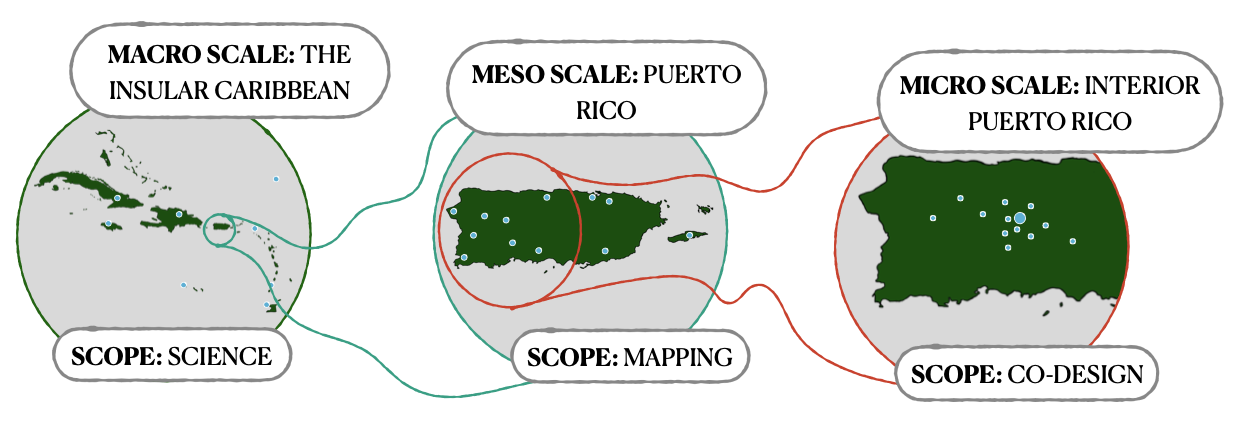
MACRO SCALE: SCIENCE IN THE CARIBBEAN
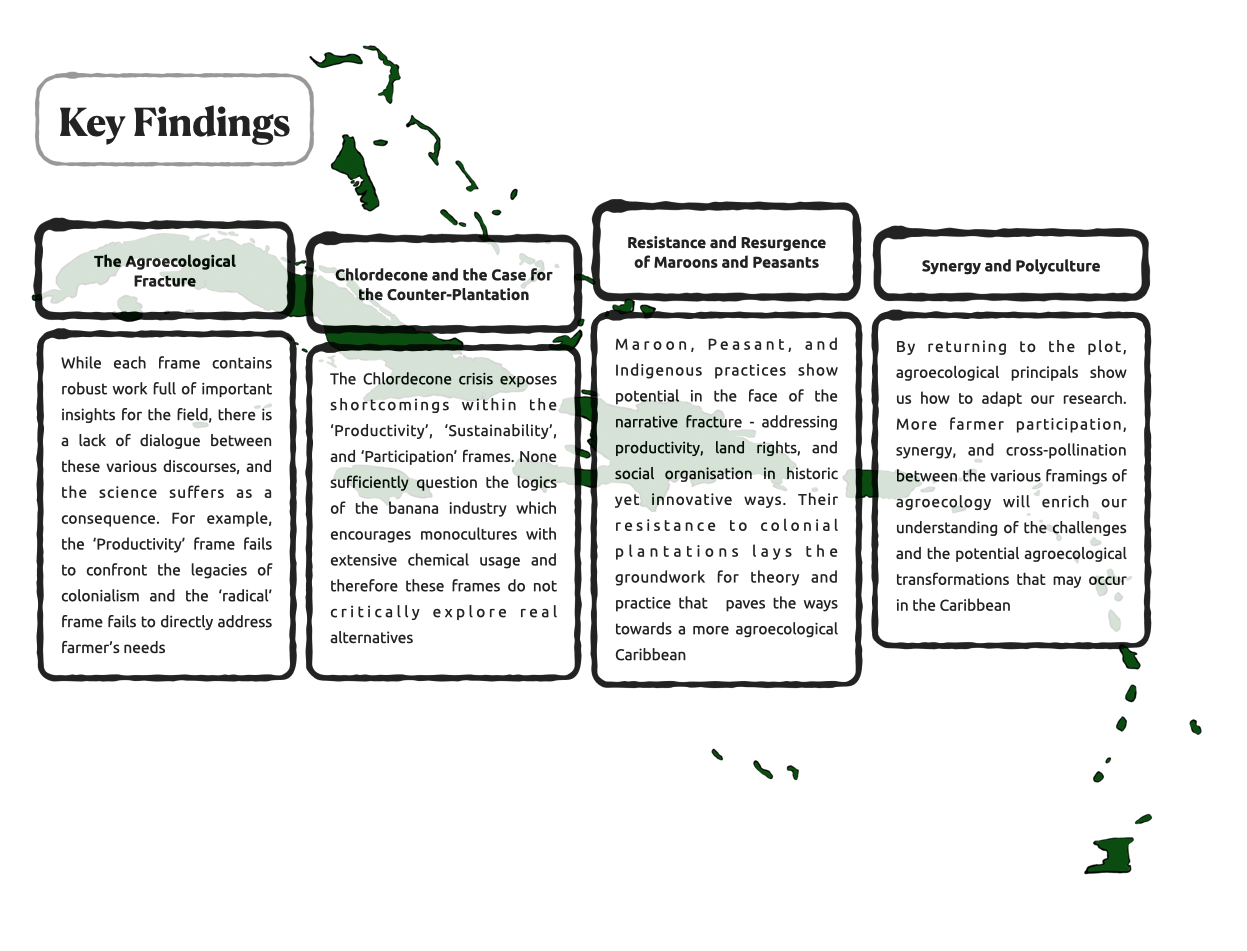
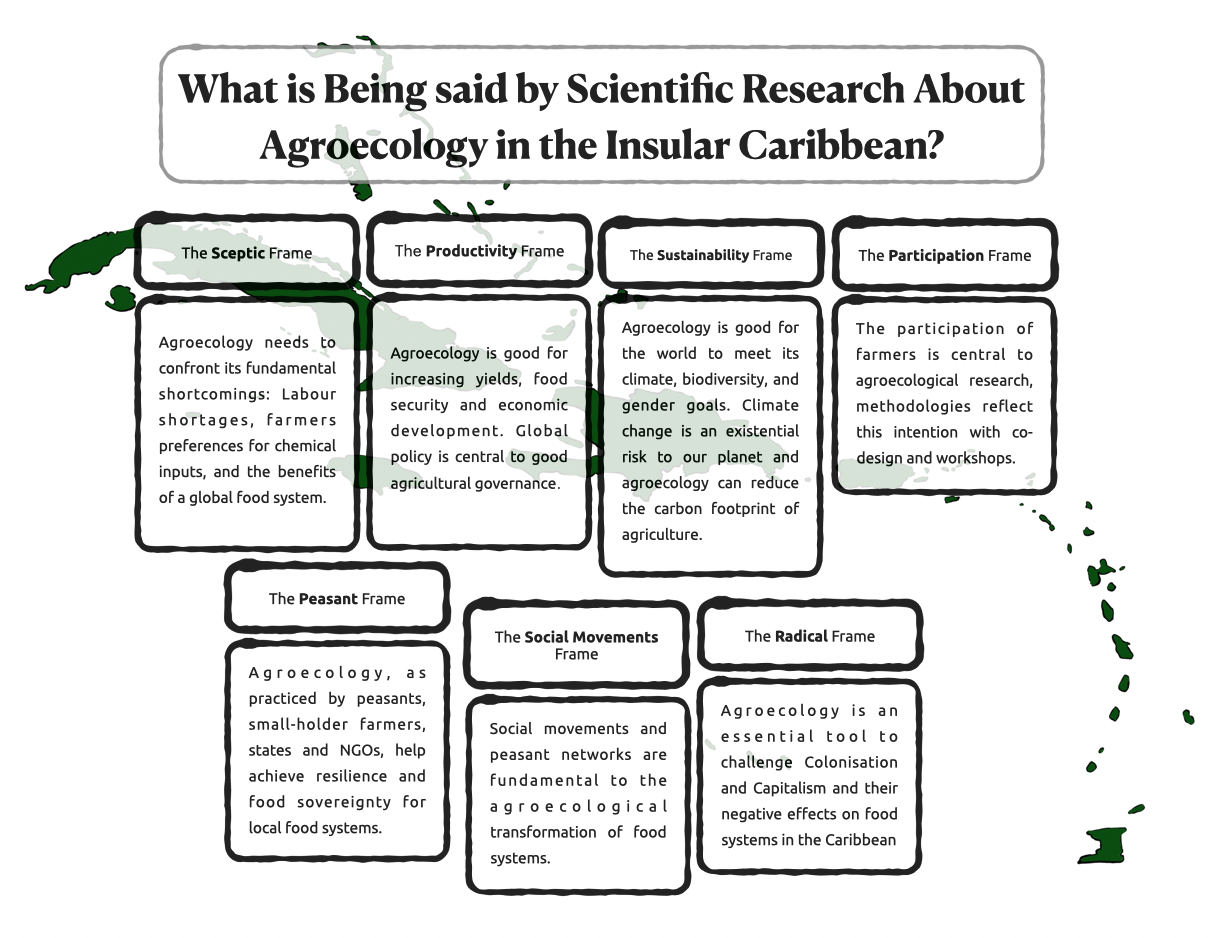
Agroecology, as a set of principles influenced by science, agrarian social movements, and ecological farming practices, has shown that it is possible to design sustainable and resilient food systems across latitudes. Despite its potential to reduce vulnerabilities to hazards and socio-environmental challenges, agroecology has seldom been documented in the Insular Caribbean – a region known for its history of colonial plantations, frequent climate events, and political struggles. To understand how discourses around agroecology are framed within the available scientific literature, we synthesized 128 peer-reviewed publications, which mention the Insular Caribbean, from the Scopus database. A frame analysis revealed seven distinct narratives, ranging from skeptical discourses and those focused mainly on productivity and sustainability, to those centered on farmer participation, peasants, social movements, and radical notions of agroecology. The fracture between these frames leads to a failure of agroecological science to effectively challenge dominant plantation logics at the expense of perspectives that underscore the power of plot, indigenous practices, marronage, knowledge sharing, and social movements. We recommend different polycultures of agroecological research, returning to the plot where frames are better integrated, and radical discourses and participatory methodologies cross-pollinate and synergize with technical approaches to support agroecological transformations of Caribbean food systems.
READ OUR PUBLISHED ARTICLE HERE!
Agroecology, as a set of principles influenced by science, agrarian social movements, and ecological farming practices, has shown that it is possible to design sustainable and resilient food systems across latitudes. Despite its potential to reduce vulnerabilities to hazards and socio-environmental challenges, agroecology has seldom been documented in the Insular Caribbean – a region known for its history of colonial plantations, frequent climate events, and political struggles. To understand how discourses around agroecology are framed within the available scientific literature, we synthesized 128 peer-reviewed publications, which mention the Insular Caribbean, from the Scopus database. A frame analysis revealed seven distinct narratives, ranging from skeptical discourses and those focused mainly on productivity and sustainability, to those centered on farmer participation, peasants, social movements, and radical notions of agroecology. The fracture between these frames leads to a failure of agroecological science to effectively challenge dominant plantation logics at the expense of perspectives that underscore the power of plot, indigenous practices, marronage, knowledge sharing, and social movements. We recommend different polycultures of agroecological research, returning to the plot where frames are better integrated, and radical discourses and participatory methodologies cross-pollinate and synergize with technical approaches to support agroecological transformations of Caribbean food systems.
READ OUR PUBLISHED ARTICLE HERE!
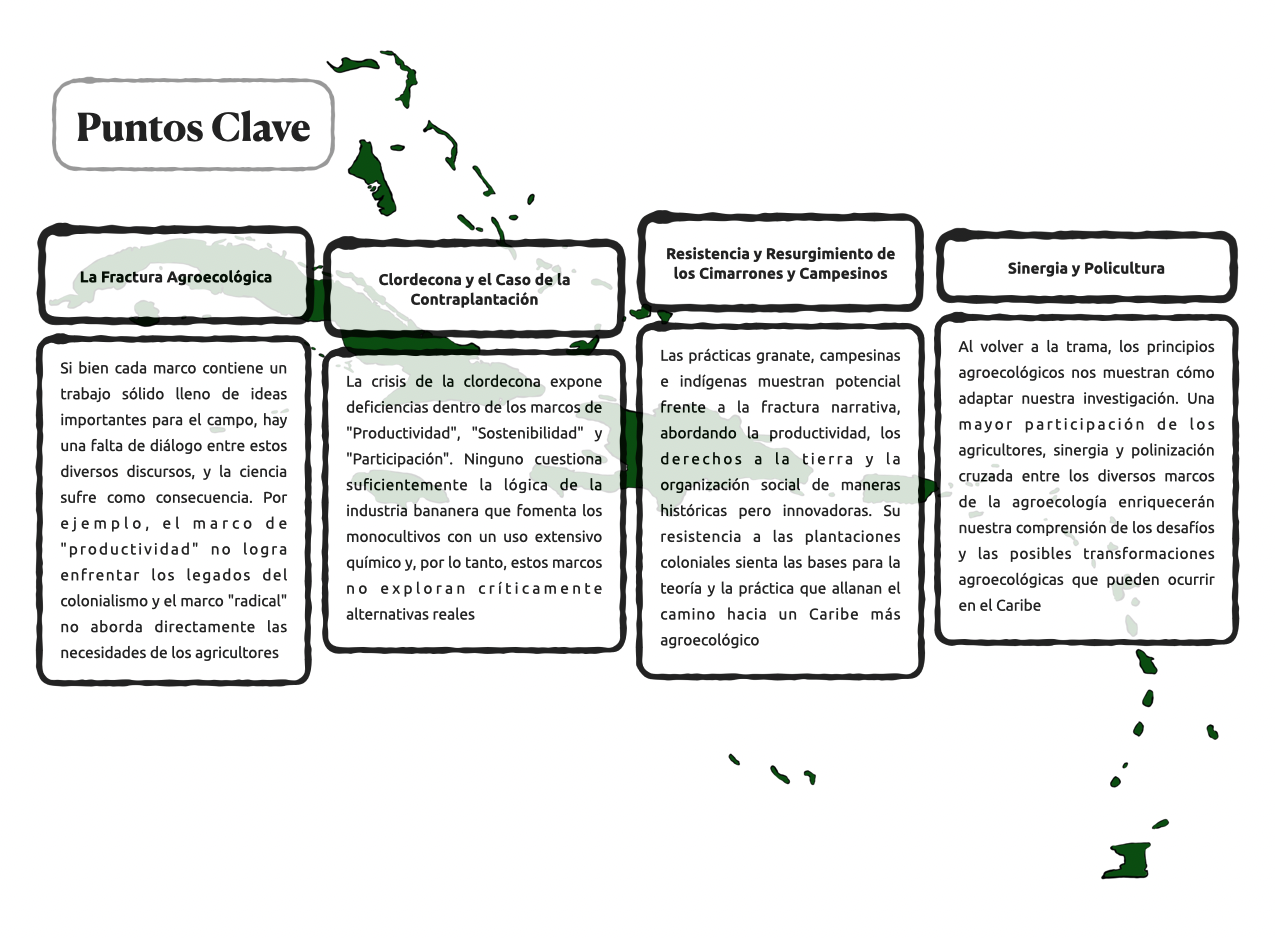
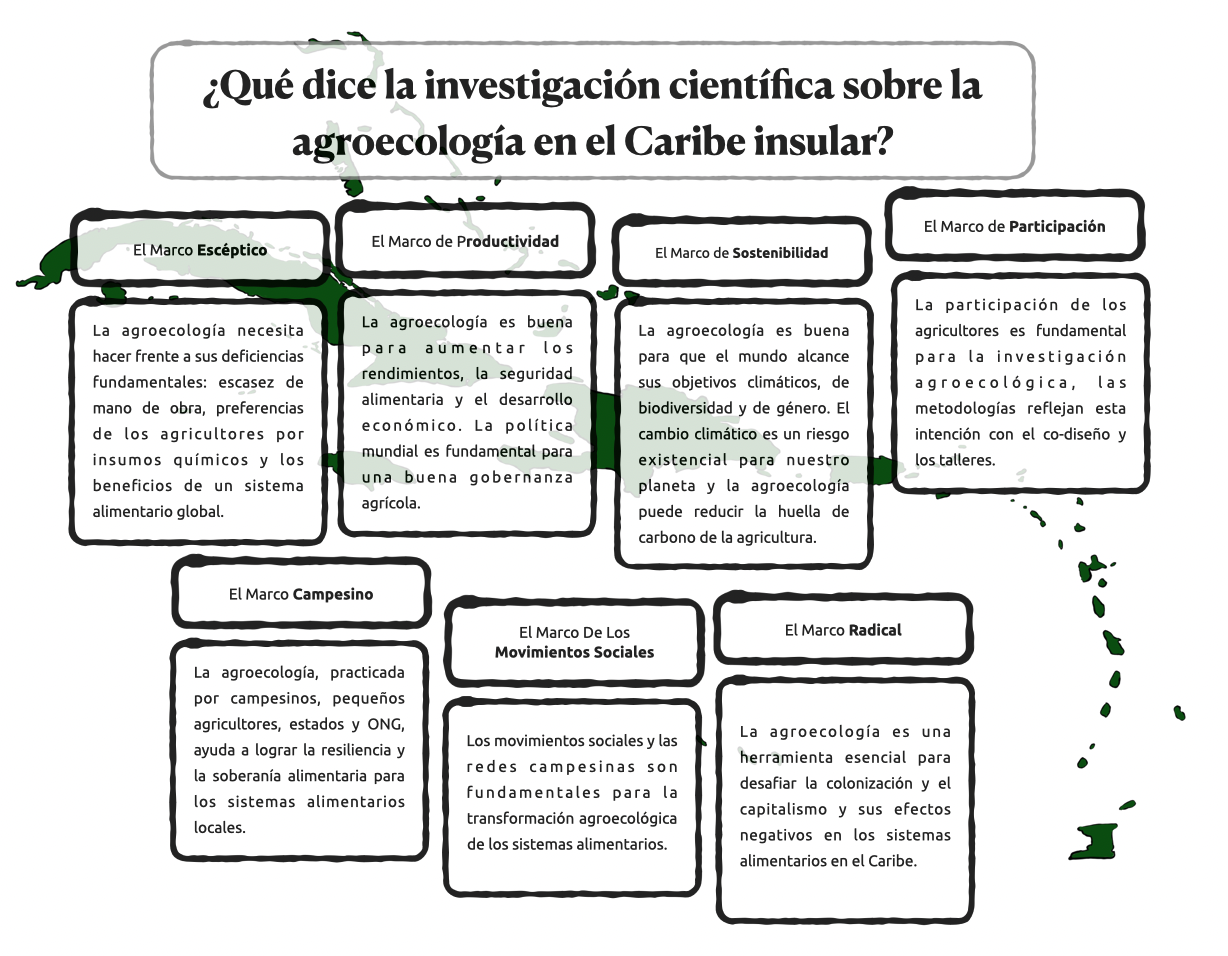
La agroecología, como un conjunto de principios influenciados por la ciencia, los movimientos sociales agrarios y las prácticas agrícolas ecológicas, ha demostrado que es posible diseñar sistemas alimentarios sostenibles y resistentes en todas las latitudes. A pesar de su potencial para reducir la vulnerabilidad a los peligros y los desafíos socioambientales, la agroecología rara vez se ha documentado en el Caribe Insular, una región conocida por su historia de plantaciones coloniales, frecuentes eventos climáticos y luchas políticas. Para entender cómo se enmarcan los discursos en torno a la agroecología en la literatura científica disponible, sintetizamos 128 publicaciones revisadas por pares, que mencionan el Caribe Insular, de la base de datos Scopus. Un análisis del marco reveló siete narrativas distintas, que van desde discursos escépticos y aquellos centrados principalmente en la productividad y la sostenibilidad, hasta aquellos centrados en la participación de los agricultores, los campesinos, los movimientos sociales y las nociones radicales de la agroecología. La fractura entre estos marcos conduce a un fracaso de la ciencia agroecológica para desafiar efectivamente las lógicas de las plantaciones dominantes a expensas de las perspectivas que subrayan el poder de la trama, las prácticas indígenas, el marrón, el intercambio de conocimientos y los movimientos sociales. Recomendamos diferentes policulturas de la investigación agroecológica, volviendo a la trama donde los marcos se integran mejor, y los discursos radicales y las metodologías participativas se polinizan y sinergizan con enfoques técnicos para apoyar las transformaciones agroecológicas de los sistemas alimentarios caribeños.
¡LEA NUESTRO ARTÍCULO PUBLICADO AQUÍ!
MESO SCALE: MAPPING THREATS TO FOOD SOVEREIGNTY
MICRO SCALE: CO-DESIGNING COLLABORATION
 Coralys, Aixa, y Georges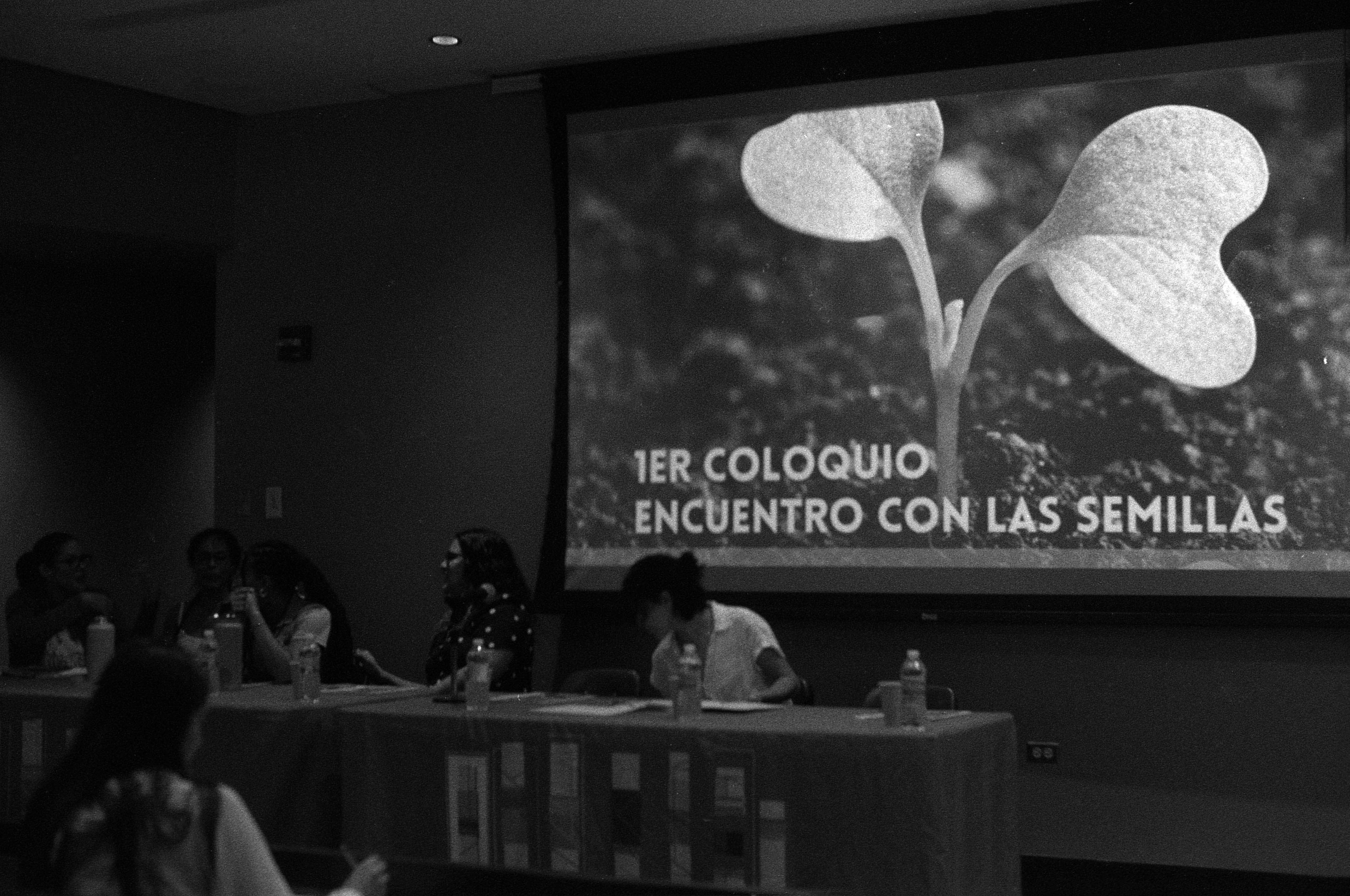
Dia Internacional de la Mujer Rural
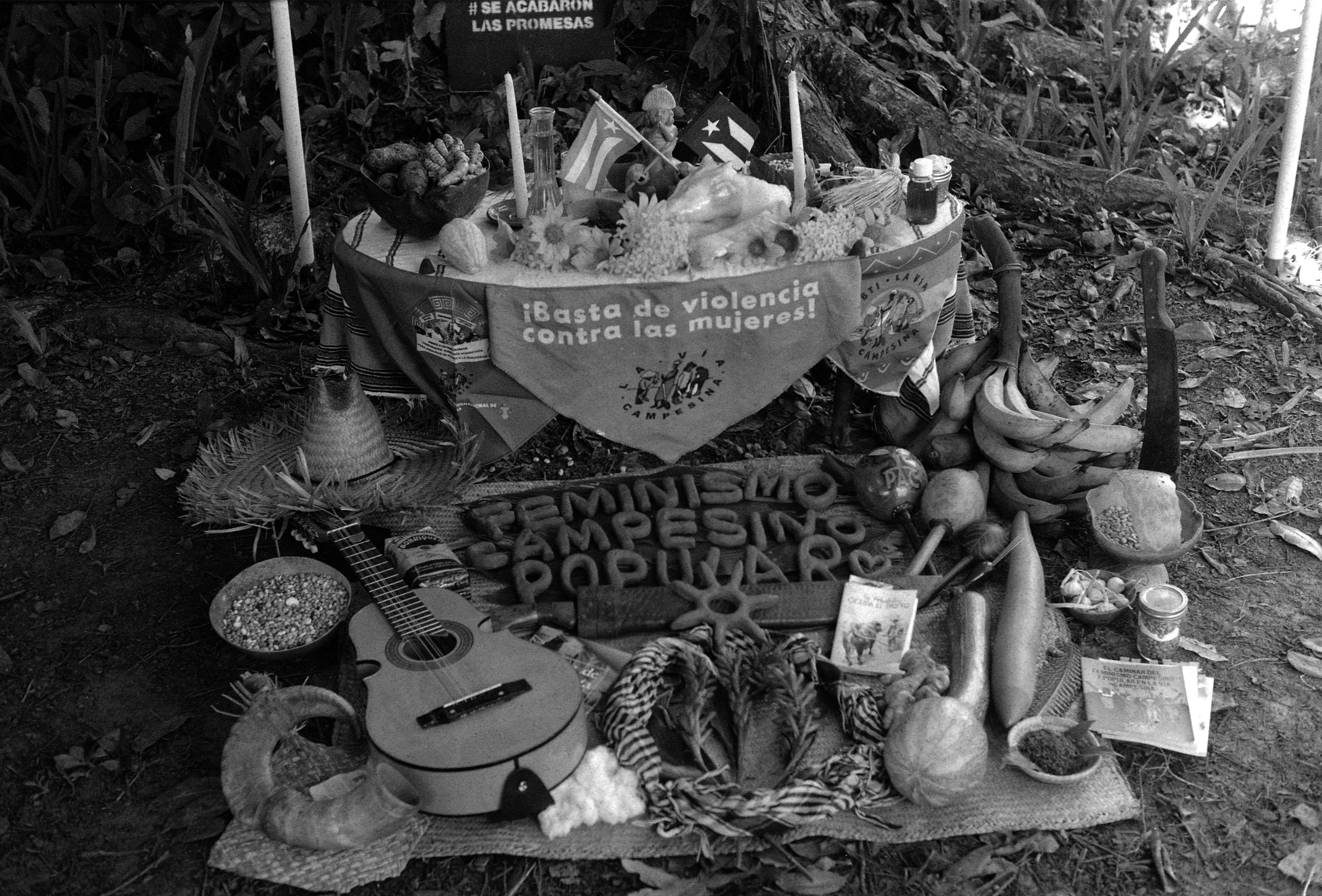
Feminismo Campesino Popular
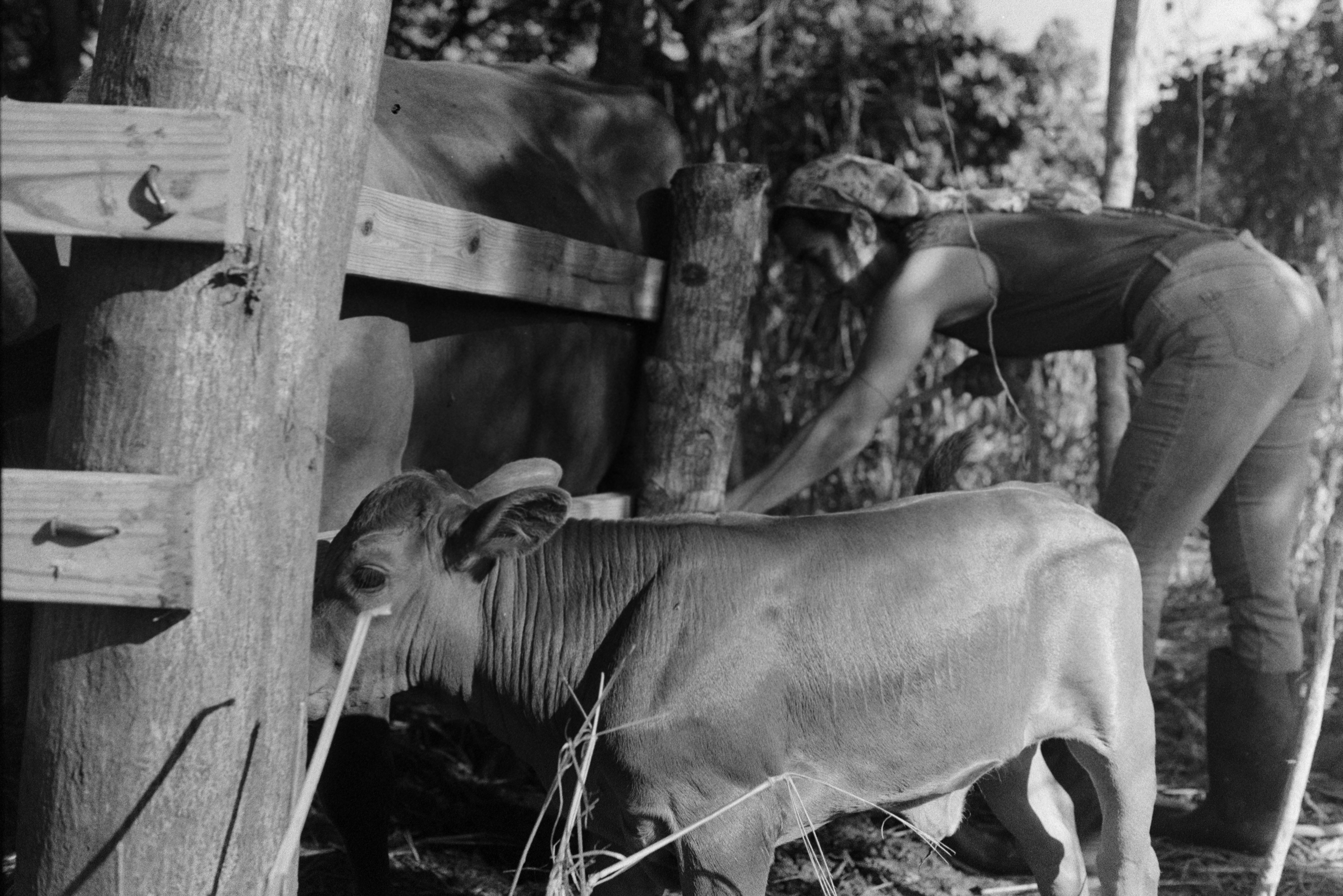
Coralys
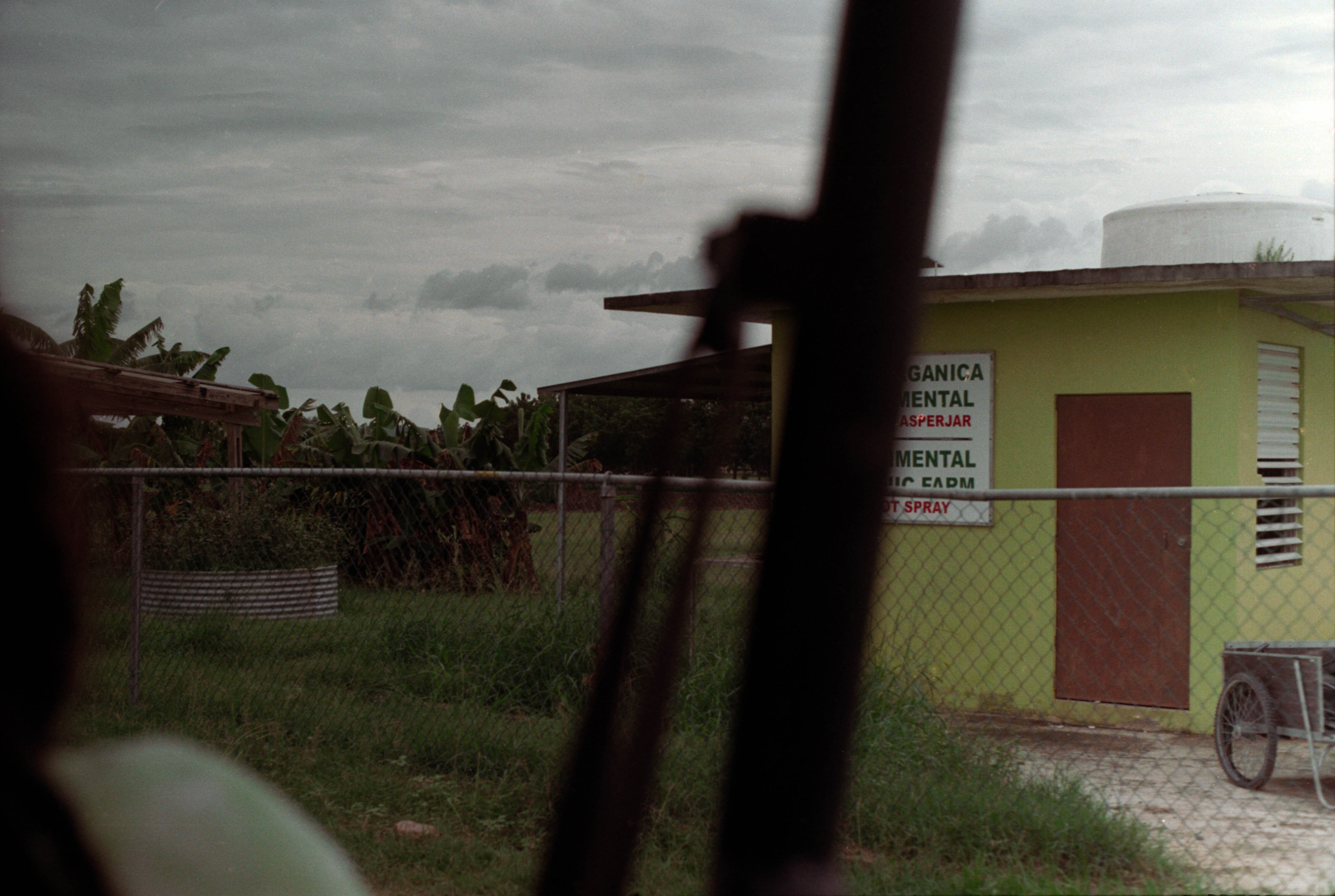
Universidad de Puerto Rico
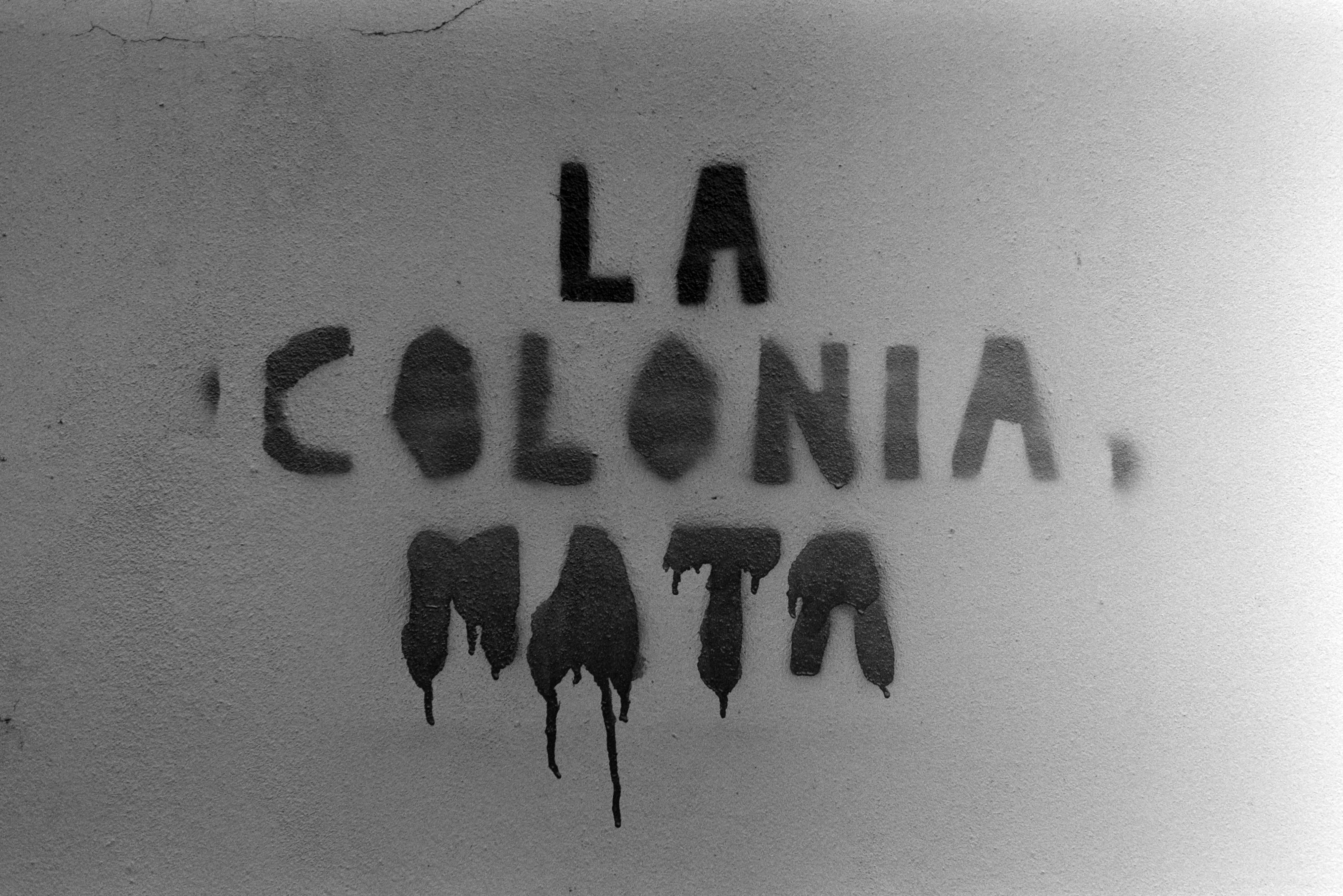
La Colonia Mata

Gustavo
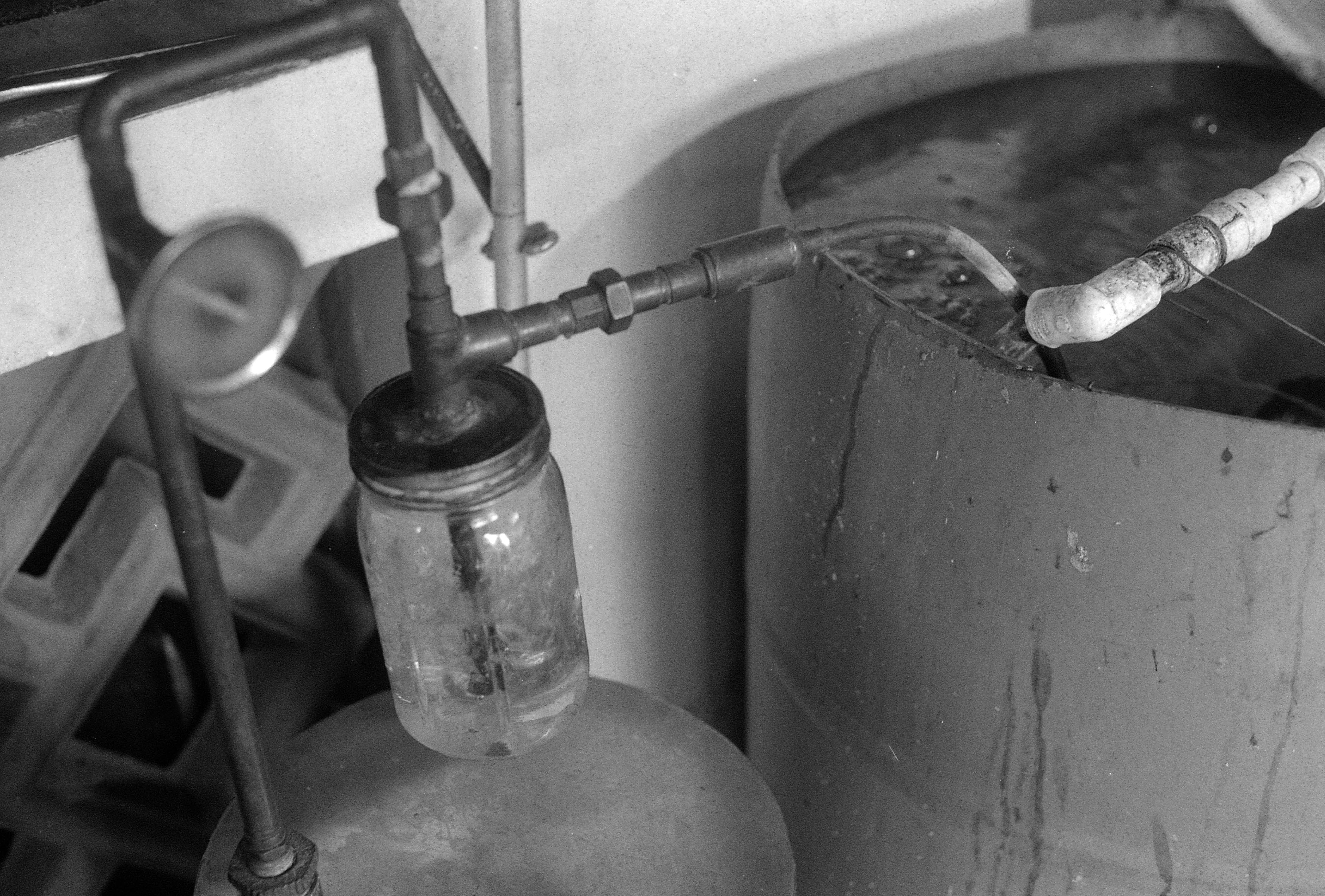
El Espiritu de la Montaña
 Dani
Dani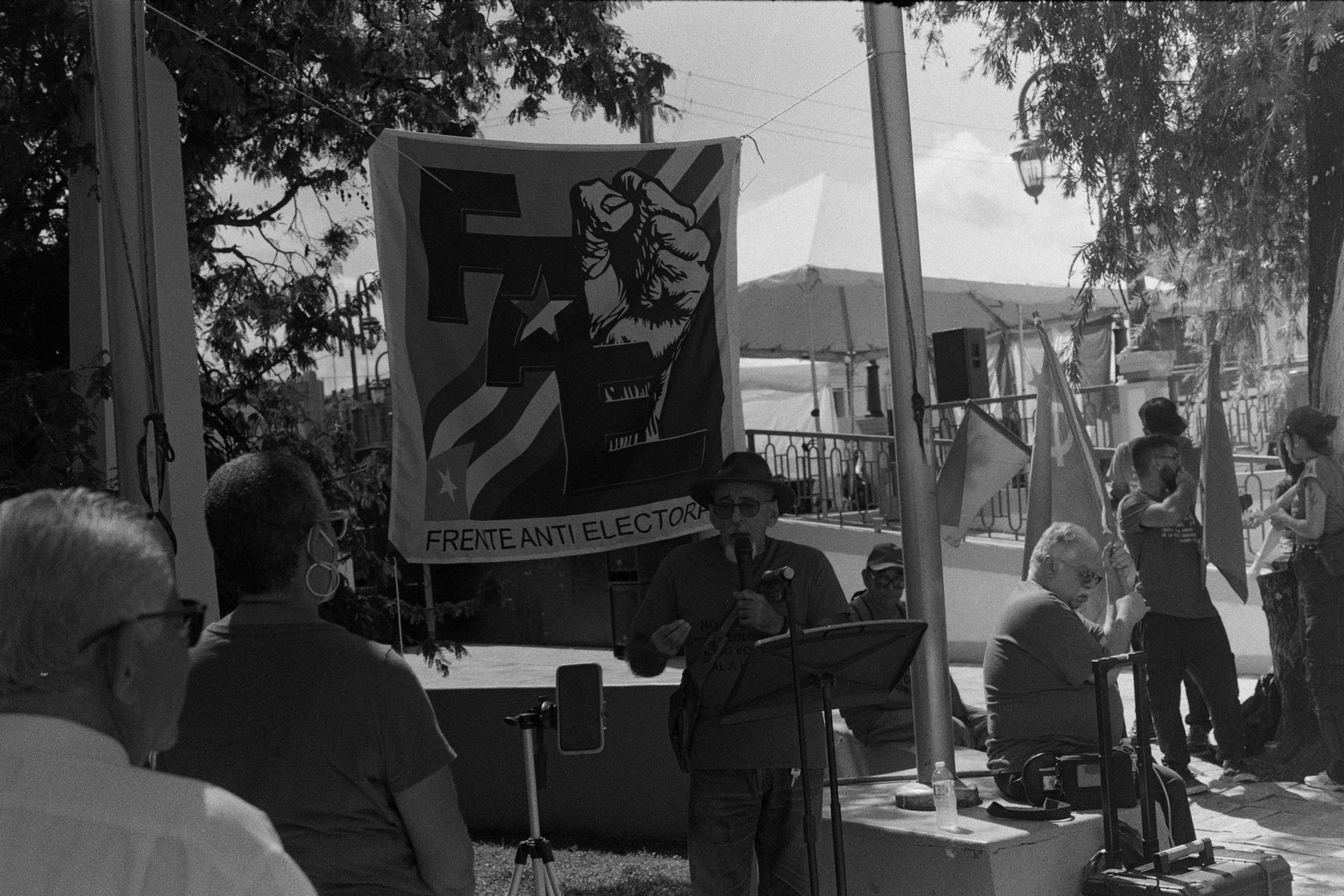 El Grito de Lares
 Caguana
La Casa de Blanca Canales

El Natalicio de Filiberto